July 27, 2026 · 2 min read
Why Accessibility Fixes Often Improve Your SEO Too
Accessibility and SEO are usually treated as separate checklists handled by different people. In practice, a surprising number of accessibility fixes and SEO best practices are the exact same technical change, just serving two different audiences.
Alt Text Serves Both
Alt text describes an image for someone using a screen reader — and it's also one of the few ways Google's crawler understands what an image actually shows, since it can't fully 'see' images the way a person can. A missing alt attribute is both an accessibility gap and a missed SEO opportunity in Google Images.
Heading Structure Helps Navigation, Both Human and Automated
Screen reader users often navigate a page by jumping between headings, which only works if headings follow a logical order (h1, then h2s, then h3s beneath them). Search engines use that same structure to understand a page's topic hierarchy when generating snippets and deciding what a page is really about.
Semantic HTML Over Generic Divs
Using a real <button> element instead of a styled <div> with a click handler, or a proper <nav> element for navigation, gives both assistive technology and search engines clear signals about what each part of the page actually does — rather than an undifferentiated block of markup.
Common mistakes
Adding alt text to every image but making it purely decorative and unhelpful (like naming a file 'image1.jpg' verbatim, or writing 'photo' with no real description) — this checks an automated audit's box without providing any of the actual benefit to screen reader users or search engines it exists for.
Fixing heading order and alt text but leaving interactive elements — buttons, form fields, custom dropdowns — with no accessible label at all. Automated scanners catch missing alt text far more reliably than unlabeled interactive controls, so these often go unnoticed despite being a bigger usability barrier.
Check Your Page
Nexora Shield's Accessibility Checker scans a page for missing alt text, unlabeled form fields, poor heading order, and other common a11y gaps — many of which are worth fixing for your search rankings alone.
Frequently Asked Questions
If I only have time to fix one accessibility issue, which one also helps SEO the most?
Missing alt text is usually the highest-leverage fix — it directly helps screen reader users and is one of the clearest signals Google's crawler uses to understand and index images.
Does a logical heading structure actually affect search rankings?
It doesn't guarantee a ranking boost on its own, but a clear h1-to-h2-to-h3 hierarchy helps search engines understand a page's topic structure, which can improve how accurately snippets and rich results are generated.
Accessibility Checker
Scans a page for missing alt text, unlabeled form fields, poor heading order, and other a11y gaps.
Related Articles
 SEO & Performance
Why Broken Links Quietly Hurt Your SEO
Dead links do more damage than a bad user experience — here's how they actually affect how Google evaluates your site.
 SEO & Performance
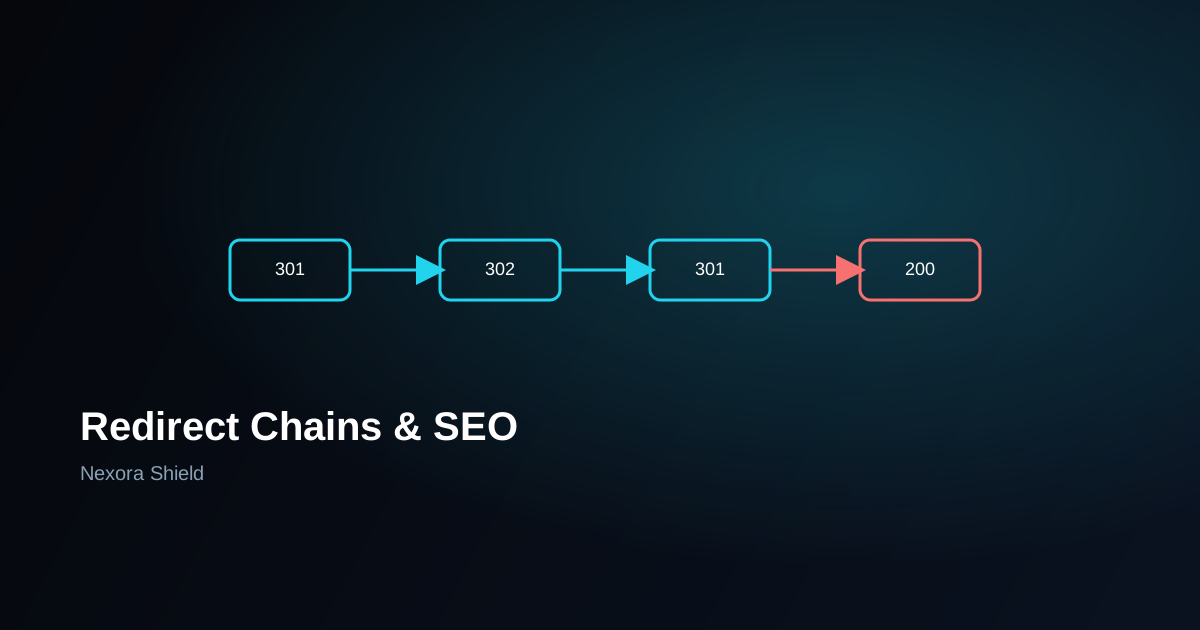
Redirect Chains: The Hidden Cost of Too Many Hops
A single redirect is harmless. A chain of five isn't — here's why redirect chains slow pages down and confuse search engines.
PrivacyWas My Email Hacked? How to Check for Data Breaches (2026)
Find out if your email address was exposed in a data breach, what attackers actually do with it, and the exact steps to lock your accounts down today.